Listening  شماره یک برای پایه هشتم

دبیرستان استعدادهای درخشان شهید بهشتی قاین 

پایه هشتم

Listening  شماره یک

برای دانلود لینک زیر را در نوار آدرس خود کپی کنید

http://s5.picofile.com/file/8152834000/Beheshti_listening1.rar.html

simplified short story (داستان کوتاه ساده)


New House


   John lived with his grandfather in a big house.Their house was very big for them , so he bought a small house in a new street .

    He had a nice and old clock in his first house. He wanted to take it to his new house . He picked it up and was going to his new house . It was heavy , so he stopped two or three times to have a rest.

   When he was going in the street , a small boy came near and looked at him. Then he said to John : "You're a silly man . Why don't you buy a watch like everybody ?"

1-با توجه به متن درستی یا نادرستی جملات زیر را تعیین کنید.

1.John and his grandmother lived in a small house.              (T)  (F)

2.He bought a small house in a new street .                         (T)  (F)

3.He had a new clock.                                                             (T)  (F)

4.John was a silly man.                                                            (T)  (F)

5.He rested  two or three times in the street .                   (T)  (F)

2- به اين پرسش ها پاسخ کامل بدهید.

1.Did John have an old watch?


2.Why did he buy a new house ?


3.Who saw John in the street ?


3- با توجه به متن پاسخ درست را انتخاب کنید.

1.John lived ……… his mother.       

a.with                                    b.near                                  c.by

2.He had a ………clock.

a.new                                     b.dirty                                 c.nice

3.He …….. three times in the street.

a.broke                                 b.rested                               c.wanted

4.A small boy came ……. and looked at him . 

a.first                                  b.near                                   c.first


simplified short story (داستان کوتاه ساده)


Repairing Watches


   Jimmy is forty years old . When he was a boy he liked watches and clocks very much  Now, he has a small shop and repairs watches . A lot of friends give him their watches and he repairs them .

   One day a good friend gives him a watch and says : " My watch doesn’t work . Please repair it for me ."

   Jimmy says :" Yes, sir. "

   After a few days he gives the watch to   his friend and gets some money for it. Then he gives his friend a small box and says : " Here are three wheels from your watch . I can not find a place for them . "


1- درست یا غلط بودن جمله های زیر را مشخص کنید.


1.Jimmy buys clocks in his shop .                             (T)  (F)

2.He repairs his friend's clock .                                  (T)  (F)

3.He likes watches .                                                   (T)  (F)

4.His friend's watch doesn't work .                            (T)  (F)


2- جواب درست را انتخاب کنید.


1.Jimmy works in a(n) ………… 

a. library               b.shop              c.store              d.office

2.He ……….. watches and clocks .  

a. buys                 b.gives              c.repairs          d.shows

3.He puts three ………….. in a box . 

a. wheels              b.watches         c.clocks           d.wallets

4.His friend gives him a …………. to repair it .

a. watch                b.clock              c.wheel            d.shop


3- به این پرسش ها پاسخ کامل بدهید.


1.What does Jimmy do ?


2.How old is he?


3.Is he a good repair man ?


4.Does he work in an office ?


المپياد زبان انگليسي سوم راهنمايي

المپياد زبان انگليسي سوم راهنمايي

  English Olympiad

☺Choose the best answer .

 1. Tomorrow is Thursday . Yesterday was ……………..

a. Sunday           b. Monday              c. Tuesday        d. Wednesday

2. January , February , ……………… , April

a. June              b. August              c. March             d. September

3. Peter , ………………these letters to the post first , please .

a. bring               b. forget                c. keep                d. take

4. Be ……………… There are a lot of cars in the street .

a) tired             b. careless                c. good                d. careful

5. “……………………Is there a post office near here?”

a) Please           b. Excuse me           c. Sorry                  d. Sure

6. A nurse usually works in the ……………………

a. school          b. baker’s                 c. bookstore             d. hospital

7. What would you like to ……........ ?" - "Tea, please !"

a. eat             b. drink                     c. have                    d. b and c

8. He's  slow; so he comes ....... in every match .

a. early           b. late                       c. fast                     d. quick

9. I can't sleep at night; my bed's too .......             

a. easy            b. difficult                 c. fast                      d. hard

10. Please shut the window; it's ....... in here!

a. hot               b. sunny                  c. rain                     d. cold

11. What time does school .......?" - "At 2.55."

a. leave             b. finish                   c. rest                   d. break

12. A : “  My aunt is sick and she’s in the hospital .”    

  B : “ ………………………..”

a All right           b. Good luck           c. Not too bad        d. That’s too bad

13. He can't buy a new car . It's too ....... .

a. cheap             b. difficult              c. different              d. expensive

14. Where do you usually eat lunch ?
a. Sandwich.       b. With Jane .        c. At 12:00           . d. In a restaurant

15. How many hours a day do you watch TV?
a. About two hours.                     b. In my living room   

 c. I watch the news.                  d. On Tuesday.
16. What did you eat last night?
a. At six.            b. Spaghetti.              c. With my family.       d. At home.
17. What will you do this afternoon?
a. I play football.         b. I played football.     

 c. I'll play football.      d. I was playing football.
18. When did you go to that restaurant?
a. Spaghetti.                 b. With Jane.                

 c. Last night.              d. About 30 minutes.
19. When will you post that letter?
a. Last night.           b. To Jane.                  c. After school.         d) Two days ago
20. When was the last time you went shopping?
a. Yesterday.          b. Tomorrow.              c. Near the bus stop.  d) in two days
21. Where are you from?
a. New York.          b. 1982.                      c. At school.               d) In the library
22. How do you get to school?
a. With train.          b. In train.                   c. By train.                d) to train
23. Do you like tennis ?           ………………….

a. No , I no like .                     b. Yes , I like .      

c. No , I don’t .                     d. No , I’m not .

24. I …………………my homework in the evening .

a) often do             b) do often               c) often does           d) does often

25. Maryam may ………………the classroom now .

a) leaving               b) left                    c) leaves                    d) leave

26. A : “ Is Betty ready ?”        B : “ No , she ……………..ready in ten minutes .”

a) will be                b) will                   c) is                           d) was

27. Reza’s brother …………………..for the bus between 2 and 3 yesterday .

a) waits                  b) waited               c) was waiting           d) is waiting

28. Let’s ………………….to the library now .

a) goes                 b) going                c) go                   d) went

29. Can your brother ……………….a bicycle now ?

a) ride                 b) rides                     c) riding                 d) is riding

30. Our kind grandfather likes to walk in parks . I usually go with …………….

a) them                  b) us                    c) him                        d) he

31. How many ………………..do you drink every day ?

a) milk                 b) cup of tea              c) water                  d) cups of tea

32. Mina wrote a letter …………………

a) every day         b) on Sundays           c) two hours ago        d) now

33. Jane: "What  ……………. in the evenings?"     Mary: "Usually I watch TV or read a book."

a) you doing                              b)  do you do            

 c) are you doing                       d) you do

34. My parents play tennis …………………

a. beautiful             b. good                c. well                     d. bad

35. He ………….. the story a few minutes ago .

a. read                   b. reads              c. is reading            d. to read

36. My sister has a ……………… work to do today .

a. few                     b. little                much                  d. lot

37. I usually play badminton ....... Monday evenings."

a. at                 b. in                        c. on                      d. with

38. “ I have a headache .”      “ I think you …………….. visit a doctor .”

a. can              b. should                 c. may not                 d. am

39.Which word is pronounced differently from the others?

a) know              b) close                 c) open                 d) now

40. My uncle usually drives the car very slowly and carefully . But yesterday he was in a hurry and he was driving fast . He had an accident because he wanted to be on time . So , my uncle is………

   a) never careless but yesterday he wasn’t .   

  b) always in a hurry and wants to be on time

   c) usually careful but yesterday he wasn’t     

  d) never fast and careless in his driving



نمونه سؤال زبان دوم

نمونه سؤال زبان دوم خرداد                   نمونه سوال زبان دوم خرداد(2)

آزمون زبان سال دوم تا درس 3 

آزمون زبان دوم - راهنمایی آینده سازان  


           مدرسه راهنمایی نمونه آینده سازان قاین       سال تحصیلی : 90-89

پایه: سوم     نوبت اول           نام امتحان: زبان  انگلیسی        تاریخ امتحان:   21 / 10/ 1389

واژگان

الف) كلمه ناهماهنگ را مشخص كنيد (1 نمره)

1.       Teacher – nurse – chair – doctor

2.    Look – read – here – open

ب) كلمه مناسب را در جاي خالي قرار دهيد (يك كلمه اضافه است). (2 نمره)

point – down – Mina's – room – sit

3.      There are twelve chairs in the ………………………… .

4.      Please ………………………… on the bench.

5.      ………………………… to the wall.

6.      ………………………… father is a dentist.

ج) با توجه به تصاوير جملات را كامل كنيد. (3 نمره)

7. There is a cap ........… the table.    

 8. It's ………… to twelve.  11:45                                          
                                                                                                                                                    
9.Don't ………………………… in your book, please.


د) با اطلاعات خودتان، گفتگوها را كامل كنيد: (2 نمره)

10. A: It's …………………        Let's ………………………… a taxi.
B: OK.

11.    A: Is it half …………………… six?
Yes, It's six ………………………… .

هـ) گزينه درست را انتخاب كنيد.

12.   The eggs are …………………………  (red – black – white)

13.   A: How are you today? B: I'm …………………………  (just – thanks – fine)

14.   Three and three is …………………………  (five – seven – six)

15.   Esmaeel has a red …………………………  (scarf – shirt – dress)

و – سؤالات ستون A را با پاسخ‌هاي ستون B جور كنيد. (يك پاسخ اضافي است)

16.   What's the time?                  (…………………………)                  a. It's blue.

17.   What color is your bag?       (…………………………)                  b. Yes, it is.

18.   Is it OK?                             (…………………………)                  c. No, She isn't.

19.   Is Bita a nurse?                  (…………………………)                  d. It's 8:50.
                                                                                                e. It's OK.

دستور

الف) گزينه‌ي مناسب را انتخاب كنيد: (2 نمره)

1.       ………………………… close your book.  

a. Aren't         b. Haven't      c. Don't          d. Isn't

2.      A: Has this book ten lesson?
B: No, ……………… hasn't.           

a. this              b. it's              c. book                        d.it

3.  A: ………………………… bicycle is this?
B: It's Ali's.                        

 a. What           b. Who            c. What time         d. Whose

4.      A: Is this my pen?
B: No, it isn't ………………………… pen.

a. my                b. your                        c. his                d. our

ب) هر گروه از كلمات نامرتب زير را به صورت جمله‌اي صحيح بنويسيد: (3 نمره)

5.      to / house / go / please / today / your / .

6.      are / the / in / cups / box / ten / there / ?

7.      has / car / the / white / a / teacher / .

ج) جملات زير را با كلمات پرسشي داده شده سؤالي كنيد: (2 نمره)

8.      My brother is a nurse.                      What …………………………………………………… ?

9.      That's my mother's scarf.               Whose …………………………………………………… ?

د) با دانش گرامري خود جملات گفتگوها را كامل كنيد: (2 نمره)

10.   A: …………………… today Sunday?  B: No, ………………………… Monday.

11.   A: ………………… go to shool today.    B: ………………………… ?                         
A: its Friday.

هـ) با استفاده از كلمه‌ي داخل پرانتر جملات را تغيير دهيد: (2 نمره)

12.   Is it a ruler on the chair? (two)

13.   She hasn't a hat in her hand. (his)

درك مطلب:   متن زير را با دقت بخوانيد

Today is Tuesday. Mina and her sister, Sara are in the street. It's seven thirty. It's late. Their teacher is in the classroom, but they aren't.

الف) با توجه به متن بالا، براي جملات صحيح (T) و براي جملات غلط (F) بگذاريد. (2 نمره)

1.       It's half past seven. (……………)

2.      Sara's teacher isn't at school. (………………)

ب) با توجه به متن بالا، پاسخ صحيح را انتخاب كنيد.

3.      Mina and Sara are …………………………  (Teachers – Student – Sisters)

ج) با توجه به متن بالا، به سؤالات پاسخ كامل بدهيد:

4.      What day is today?

5.      Are Sara and Mina late?

6.      What's the time?

7.      Is Sara a nurse?

ديكته: الف) املاي كامل كلمات ناقص را در محل نقطه‌چين زير هر كلمه بنويسيد: (8 نمره)

-   It is ten (min_t_s) to twelve. It's (_l_ven) fifty.      Please (c_me) here. Don't (st_ _d) there.

-          Today is (Th_ _sday), it isn't (We_ne_day).     A: (T_ _nk) you. B: (Y_ _'re welcome.

-          What's the time? It's (ab_ _t) ten (o'cl_ _k).     Ali's (h_ _r) is (ye_lo_). It isn't (br_ _n).

-          The (P_li_eman) has a (f_m_ly).        There are five (Sol_ _ers) in the (pi_t_re).

ب) با توجه به تصاوير و اعداد املاي كامل كلمات را بنويسيد:

100   (h _ _ _ _ _ _)           80  (e_ _ _ _ _)

آموزش تصویری لغات 1

   
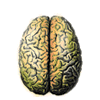
bone   brain   ear
   
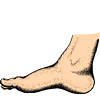
eye   foot   hair

   
heart   lips   muscle
   
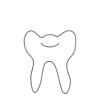
skull   tongue   tooth


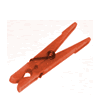
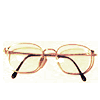
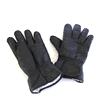
clothes-peg   coat   crown
   
dress   glasses   gloves
   
backpack   baseball cap   bathrobe

   
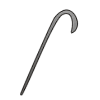
bowtie   briefcase   cane

   
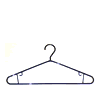
goggles   hanger   hat
   
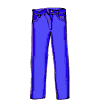
jacket   jeans   mittens
   
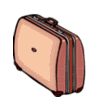
sneakers   suitcase   sunglasses
   
swimsuit   tie   toque


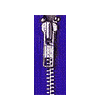
umbrella   wallet   zipper


ring

امثال و حکم نهج البلاغه 1


الکلام ُفی وَثاقِکَ مالم تَتَکَلَّم بِهِ فَاذاتَکَلَّمتَ بِهَ صِرتَ فِی وَثاقِه.ِ


قصار38، ص430


ترجمه:


سخن در بند توست تا بر زبانش نرانی و چون گفتی اش تو در بند آنی


معادل انگلیسی:


When the word is out belongs to another.


A still tongue makes a wise head


معادل فارسی:


سخن تا نگویی بر او دست هست        چو گفته شود یابد او برتو دست


(سعدی)

تلفظ s و ed

تلفظ پايانه‌هاي s و ed

پايانه‌ها (يا پسوندهاي) s و ed دو تا از متداول‌ترين پايانه‌ها (endings) در زبان انگليسي هستند. قواعد تلفظ آنها تغيير ناپذير است و براي انواع مختلف کلمات يکسان است.


کاربرد پايانه s

پايانه s چهار کاربرد مختلف دارد:


کاربردها

تلفظ
صداي /S-/ صداي /Z-/ صداي /IZ-/

اسامي جمع

act » acts

day » days voice » voices

حالت ملکي

Mark » Mark's Ann » Ann's James » James's
افعال سوم شخص مفرد

like » likes

lead » leads teach » teaches
حالت مخفف
 is و has
it is » it's

she is » she's

---


نحوه تلفظ پايانه s

1- در کلماتي که به يکي از صداهاي //، //، //، //، // و // ختم مي‌شوند، پايانه s صداي /IZ-/ مي‌دهد:

refuses, passes, judges, watches, garages, wishes.

2- پس از حروف صدادار و نيز کلماتي که به يکي از صداهاي //، //، //، //، //، //، //، //، // و // ختم مي‌شوند، پايانه s صداي /z-/ مي‌دهد:

boys, lies, ways, pubs, words, pigs, loves, bathes, rooms, turns, things, walls, cars.

3- پس از حروف بي‌صداي //، //، //، // و // پايانه s صداي /s-/ مي‌دهد:

cups, cats, walks, laughs, tenths.


کاربرد پايانه ed

  پايانه ed براي ساختن زمان گذشته ساده و نيز قسمت سوم افعال با قاعده به کار مي‌رود:


کاربرد

تلفظ
صداي /Id-/ صداي /d-/ صداي /t-/

حالتهاي گذشته افعال

need » needed

want » wanted

fill » filled

need » needed

work » worked

help » helped


نحوه تلفظ پايانه ed

1- پس از يک // يا //، پايانه ed صداي /Id-/ مي‌دهد:

landed, started, visited, demanded

2- پس از حروف صدادار و نيز حروف بي‌صداي //، //، //، //، //، //، //، //، //، //، // و //،  پايانه ed صداي /d-/ مي‌دهد:

tied, paid, robbed, lived, used, judged, seemed, turned, cared, failed.

3- پس از بقيه حروف بي‌صدا، يعني //، //، //، //، //، // و // پايانه ed صداي /t-/ مي‌دهد:

developed, looked, laughed, berthed, missed, wished, watched.

 http://lmohammadib.blogfa.com/

Jokes

: Jokes

A very old lady teacher of English

: ask this question with the class 

? When I say "I am beautiful", which tense is it

.One pupil answered: Its the past tense, of course


.A boy goes to see a dance

:His mom angrily asks him

? Did you see anything there that you were not supposed to see

! Boy: yes, I saw dad

گرامر درس 6 سال دوم

گرامر درس شش:
مقدمه :کلیه کارهایی که ما انجام میدهیم از نظر زمانی در سه زمان ( گذشته _ حال _ آینده ) انجام میگیرند که ما تدریس زمانها را با زمان حال ساده شروع میکنیم.
زمان حال ساده:کارهایی را نشان میدهد که بطور تکراری هر روز یا هر ماه ... انجام میگیرند.مثلا شما هر روز از خواب بیدارمیشوید- غذا میخورید یا به مدرسه میروید.
فرمول جملات حال سا ده:
قید زمان + قید مکان + مفعول + فعل اصلی + فاعل
E1: I see Ali at school every day.
E2: We play football at school on Mondays.
نکته مهم :
اگر فاعل جمله سوم شخص مفرد ( he _ she _ it ) باشدبه آخر فعل اصلی(s _es ) اضافه میشود.
E1: She cleans the room every night.
E2: My father watches TV at home.
توضیح: اینکه در شماره 2 به جایMy father میتوان از he استفاده کرد.
نکته: اگر حرف آخر فعل اصلی (s_sh _ch _o _x) باشد بجای s از es استفاده میشود.
نشانه زمان حال ساده :
نشانه زمان حال ساده کلمات ( زمان (every+ و همچنین( روزهای هفته بصورت جمع on+ )میباشد.
(every night , every Monday , on Fridays , on Tuesdays

نمونه سوال اول

نمونه سوال اول خرداد89

سرو کهنسال اسفاد

سرو کهنسال اسفاد

 سرو کهنسال اسفاد

بقیه عکس ها در ادامه مطلب

ادامه نوشته

Why God Made Teachers

Why God Made Teachers

…………………………………

Why God Made Teachers

When God created teachers,

He gave us special friends

To help us understand His world

And truly comprehend

The beauty and the wonder

Of everything we see,

And become a better person

With each discovery.

When God created teachers,

He gave us special guides

To show us ways in which to grow

So we can all decide

How to live and how to do

What's right instead of wrong,

To lead us so that we can lead

And learn how to be strong.

Why God created teachers,

In His wisdom and His grace,

Was to help us learn to make our world

A better, wiser place.

http://englishclass1.blogfa.com/

تصاویری زیبا از اسفاد


تصاویری زیبا از اسفاد

حروف اضافه(2)                  Prepositions of time

Prepositions of Time

at, in, on

We use

at for a PRECISE TIME

in for MONTHS, YEARS, CENTURIES and LONG PERIODS

on for DAYS and DATES

at

in

on

PRECISE TIME

MONTHS, YEARS, CENTURIES and LONG PERIODS

DAYS and DATES

at 3 o'clock

in May

on Sunday

at 10.30am

in summer

on Tuesdays

at noon

in the summer

on 6 March

at dinnertime

in 1990

on 25 Dec. 2010

at bedtime

in the 1990s

on Christmas Day

at sunrise

in the next century

on Independence Day

at sunset

in the Ice Age

on my birthday

at the moment

in the past/future

on New Year's Eve

Notice the use of the preposition of time at in the following standard expressions


Expression

Example

at night

The stars shine at night.

at the weekend

I don't usually work at the weekend.

at Christmas/Easter

I stay with my family at Christmas.

at the same time

We finished the test at the same time.

at present

He's not home at present. Try later.

 Notice the use of the prepositions of time in and on in these common expressions

in

on

in the morning

on Tuesday morning

in the mornings

on Saturday mornings

in the afternoon(s)

on Sunday afternoons

in the evening(s)

on Monday evening

When we say last, next, every, this we do not also use at, in, on.

I went to London last June.    not in last June

He's coming back next Tuesday.   not on next Tuesday

I go home every Easter.     not at every Easter

We'll call you this evening.    not in this evening

Look at these examples:

I have a meeting at 9am.

The shop closes at midnight.

Jane went home at lunchtime.

In England, it often snows in December.

Do you think we will go to Jupiter in the future?

There should be a lot of progress in the next century.

Do you work on Mondays?

Her birthday is on 20 November.

Where will you be on New Year's Day?

حروف اضافه(1)        Prepositions of place

English Prepositions

  There are about 150 prepositions in English. Yet this is a very small number when you think of the thousands of other words (nouns, verbs etc). Prepositions are important words. We use individual prepositions more frequently than other individual words. In fact, the prepositions of, to and in are among the ten most frequent words in English. Here is a short list of 70 of the more common one-word prepositions. Many of these prepositions have more than one meaning. Please refer to a dictionary for precise meaning and usage


Prepositions of Place
at, in, on

In general, we use:

  • at for a POINT
  • in for an ENCLOSED SPACE
  • on for a SURFACE

at

in

on

POINT

ENCLOSED SPACE

SURFACE

at the corner

in the garden

on the wall

at the bus stop

in London

on the ceiling

at the door

in France

on the door

at the top of the page

in a box

on the cover

at the end of the road

in my pocket

on the floor

at the entrance

in my wallet

on the carpet

at the crossroads

in a building

on the menu

at the entrance

in a car

on a page

Notice the use of the prepositions of place at, in and on in these standard expressions:

at

in

on

at home

in a car

on a bus

at work

in a taxi

on a train

at school

in a helicopter

on a plane

at university

in a boat

on a ship

at college

in a lift (elevator)

on a bicycle, on a motorbike

at the top

in the newspaper

on a horse, on an elephant

at the bottom

in the sky

on the radio, on television

at the side

in a row

on the left, on the right

at reception

in Oxford Street

on the way

Look at these examples:

  • Jane is waiting for you at the bus stop.
  • The shop is at the end of the street.
  • My plane stopped at Dubai and Hanoi and arrived in Bangkok two hours late.
  • When will you arrive at the office?
  • Do you work in an office?
  • I have a meeting in New York.
  • Do you live in Japan?
  • Jupiter is in the Solar System.
  • The author's name is on the cover of the book.
  • There are no prices on this menu.
  • You are standing on my foot.
  • There was a "no smoking" sign on the wall.
  • I live on the 7th floor at 21 Oxford Street in London.


صفات

صفات

صفات کلماتي هستند که کيفيت و چگونگي افراد، اشياء، مکانها و ... را بيان مي‌کنند. صفت تنها يک حالت دارد؛ يعني اينکه با اسم مفرد يا جمع، مذکر يا مؤنث بطور يکسان بکار مي‌رود:

a young man/woman

young men/women

اما تنها موارد استثناء، صفات this و that مي‌باشند که پيش از اسامي جمع به these و those تبديل مي‌شوند:

this book - those books,  that boy - those boys


مکان صفات

صفت‌ها مي‌توانند در موقعيت‌ها و جاهاي مختلفي در يک جمله ظاهر شوند که در زير به مهمترين اين موقعيت‌ها اشاره مي‌شود:

1- قبل از يک اسم:

a good man, an old car, the green carpet

گاهي بيش از يک صفت، اسمي را توصيف مي‌کنند:

a good young man,  the beautiful green carpet


2- پس از فعل be:

  • You are beautiful.

  • She is fat.

  • The bus is late.

بجز فعل be، افعال ديگري نيز مانند seem، look، become و stay مي‌توانند قبل از صفت قرار بگيرند:

  • It looks interesting. (جالب به نظر مي‌رسد.)

  • It is becoming sunny. (هوا دارد آفتابي مي‌شود.)

3- پس از the، که در اين صورت کلمه اصلي يک عبارت اسمي محسوب مي‌شود:

the young جوانان

the old پيران

the dead مردگان

the English انگليسي‌ها

4-بعد از برخي افعال، يک صفت مي‌تواند به دنبال مفعول بيايد:


صفت

مفعول

فعل

فاعل

secret. her past kept She
mad. me is driving The noise

lucky. myself consider I
angry. him made Her behaviour


ترتيب صفات

مي‌دانيم که صفت‌ها معمولاً قبل از اسم مي‌آيند، اما اگر بيش از يک صفت اسمي را توصيف کنند، در اينصورت صفتها معمولاً به ترتيب خاصي قرار مي‌گيرند. هر چند ترتيب قرار گيري صفت‌ها پيش از يک اسم هميشه ثابت نيست، اما جدول زير به شما کمک مي‌کند تا نحوه‌ی جاگيري کلي آنها را ياد بگيريد:


6

جنس

5

مليت

4

رنگ

3

سن

2

اندازه

1

بيان عقيده يا احساس


flower     yellow     beautiful a
nurse   Indian   young   handsome that

tables wooden       big   those
cat   Persian white old     a


توضیحات بیشتر در ادامه مطلب

http://www.zabanamoozan.com

ادامه نوشته

تفاوتهای انگلیسی آمریکایی و انگلیسی بریتانیایی

تفاوتهای انگلیسی آمریکایی و انگلیسی بریتانیایی

آيا انگليسي آمريکايي (American English) و انگليسي بريتانيايي (British English) دو زبان مجزا هستند يا دو حالت مختلف از زبان انگليسي؟ بعضي‌ها مي‌گويند آنها دو زبان مختلف هستند ولي خيلي‌ها آنها را تنها حالتهاي مختلفي از يک زبان مي‌دانند.

البته هيچ پاسخ دقيقي براي اين پرسش وجود ندارد. ما فقط مي‌توانيم بگوييم که تفاوتهايي ميان آنها وجود دارد. البته بايد بدانيد که اين تفاوتها جزئي بوده و در اثر يکپارچه شدن دنياي امروز اين تفاوتها روز به روز کمتر مي‌شوند.

در ادامه با برخي از تفاوتهاي ميان اين دو نسخه از زبان انگليسي آشنا مي‌شويد.


املاي کلمات

انگليسي بريتانيايي تمايل دارد که املاي بسياري از کلماتي که ريشه فرانسوي دارد را حفظ کند، در حاليکه آمريکايي‌ها بيشتر سعي مي‌کنند کلمات را همانطور که تلفظ مي‌کنند بنويسند. علاوه بر اين، آنها حروفي را که مورد نياز نيست حذف مي‌کنند. به مثالهاي زير دقت کنيد:

British English

American English

colour

color
centre center
honour honor
analyse analyze
cheque check
tyre tire
favour favor

اگر چه هر دو نسخه‌ي آمريکايي و بريتانيايي زبان انگليسي صحيح هستند، اما املاي آمريکايي معمولاً ساده‌تر است. بنابراين بهتر است بطور کلي از املاي آمريکايي استفاده کنيد، مگر اينکه بخواهيد براي خوانندگان بريتانيايي چيزي بنويسيد.


تلفظ

تلفظ‌ها و لهجه‌هاي گوناگوني در انگليسي محاوره‌اي وجود دارد که پرداختن به همه آنها در يک مقاله امکانپذير نيست. بنابراين تنها به تفاوتهاي اصلي بين دو نوع اصلي زبان انگليسي،‌ يعني انگليسي آمريکايي و انگليسي بريتانيايي اشاره مي‌کنيم:

   صداي /r/ ممکن است در بعضي از کلمات انگليسي بريتانيايي رسا نباشد؛ مثلاً کلمات car، park، star و bark را در نظر بگيريد. قاعده‌ي آن اينست که حرف r تنها وقتي که يک حرف صدادار بعد از آن بيايد تلفظ مي‌شود، مانند Iran، British و bring.

   آمريکاييها تمايل دارند کلماتي که به «-duce» ختم مي‌شوند (مانند reduce، produce، induce و seduce) را بصورت /-du:s/ تلفظ کنند. در انگليسي بريتانيايي اين اغلب کمي متفاوت است:/-dju:s/

براي فراگيري سيستم تلفظ IPA اينجا را کليک کنيد.

   آمريکاييها تمايل دارند کلمات را با حذف حروف کاهش دهند. بعنوان مثال کلمه «facts» در انگليسي آمريکايي درست مثل «fax» تلفظ مي‌شود - حرف t تلفظ نمي‌شود.

   گاهي حروف صدادار در انگليسي بريتانيايي حذف مي‌شوند. بعنوان مثال در هيچيک از کلمات «secretary» و «tributary» حرف a تلفظ نمي‌شود.

   گاهي استرس کلمه در هر کدام از دو نسخه آمريکايي و بريتانيايي تفاوت دارد:

advertisement:

American English:  /'/

British English:  /'/


لغت

در جدول زير چند کلمه متداول بريتانيايي بهمراه معادل آمريکايي آن ارائه شده است:

British English

American English

معني فارسي
lift elevator آسانسور
trousers pants شلوار
lorry truck کاميون
petrol gasoline بنزين
underground subway مترو
aerial antenna آنتن
rubber eraser پاک‌کن
flat apartment آپارتمان
wardrobe closet جارختي
queue line صف
pavement sidewalk پياده‌رو

منبع: www.zabanamoozan.com

چند نرم افزار جالب و کاربردی برای موبایل


روی لینک های زیر کلیک کنید و سپس مستطیل سبز رنگ Download Now را انتخاب ودر ادامه لینک آبی رنگClick here to download this file را کلیک کنید و Save را بزنید.

فایلها را از حالت زیپ(Zip) خارج و در گوشیتان نصب (Instal)کنید.

نکته:گوشی باید از جاوا(Java) پشتیبانی کند.


 دیکشنری انگلیسی به انگلیسی   4.67mg

دیکشنری انگلیسی به فارسی

دیکشنری فارسی به انگلیسی

نرم افزار ۵۰۴ واژه     4.41mg

نرم افزار تست گرامر

نرم افزار تست لغت